
CHRISTOPHER COLUMBUS WORLD
THE WORLD OF DISCOVERIES
Christopher Columbus World is set to become an extraordinary cultural landmark on Porto Santo, Madeira and Portugal.
Columbus World
WHY SUCH A LARGE PROJECT?
What is Madeira known for? Cristiano Ronaldo, the world-renowned footballer, and Madeira wine immediately come to mind. Yet Madeira holds an even more remarkable, largely untold story: it was the first place in the Western Hemisphere to produce rum. Furthermore, Madeira and Porto Santo stand among the most historically significant locations connected to Christopher Columbus’s explorations.
Columbus’s voyages marked a defining turning point in human history, signalling the dawn of globalisation and triggering profound demographic, commercial, economic, social, and political transformations. His name is recognised by schoolchildren across the world, and his story has been told countless times. His legacy is both celebrated and contested—but undeniably extraordinary.
And yet, in Madeira and Porto Santo, this powerful historical connection remains underrepresented. Porto Santo hosts only a modest museum dedicated to Columbus, attracting relatively few visitors. This is despite compelling theories suggesting that Columbus himself may have been born in Madeira.
The Age of Discoveries must be studied rigorously, without embarrassment or attempts to rewrite the past according to the ideological conveniences of the present and future. The Portuguese Empire represents one of the most extraordinary examples of a maritime empire in world history. Its expansion, which began in the fifteenth century, not only marked the beginning of the European Age of Discoveries but also defined a new imperial model based on the control of trade routes, strategic ports, and coastal cities across Africa, Asia, and the Americas.
The rise of the Portuguese monarchy, particularly under Prince Henry the Navigator in the fifteenth century, proved decisive. The Portuguese court invested heavily in cartography, shipbuilding, and navigational studies, transforming Portugal into a pioneering centre for maritime exploration. This geographical position, combined with political ambition and commercial incentives, laid the foundations for an empire built on the control of sea routes rather than territorial conquest.
Equally overlooked is Madeira’s pioneering role in sugar cane cultivation and rum production. The island was the first in the Western world to grow sugar cane and produce rum—decades before these were introduced to the Americas. Despite this rich heritage, there is no dedicated museum or major attraction celebrating this legacy. Meanwhile, Columbus’s life continues to intrigue historians, with key aspects still debated and unresolved.
Madeira makes little of its history; apart from the birthplace of Rinaldo, visitors know very little about the history of the island. Once, Portugal ruled the sea; they even ruled the Strait of Hormuz. This is even before Christopher Columbus went across to the Caribbean.
If you ask a visitor to the island (Madeira) if they know that Christopher Columbus lived in Madeira and married in Porto Santo, only one out of 29 tourists has heard “something” about this. Even worse, they do not know that rum was first made in Madeira in the Western world years before Christopher Columbus took it with him on his voyage and later brought sugar cane to the Caribbean. Just think Madeira is not even listed in major directories of most world rum distillers. See: https://rumgeography.com/
Portugal has changed the course of world history, crossed oceans, connected continents and built a global cultural and linguistic heritage. It is therefore incomprehensible that Portugal still has no major national museum capable of telling this epic story on the scale it deserves.
Portugal and Madeira have an extraordinary heritage, millions of visitors and an unparalleled history. Portugal should not be ashamed of its own history. Portugal needs to embrace, preserve and pass on to new generations what the Portuguese have achieved and the impact they have had on the world.
This presents a unique and powerful opportunity.
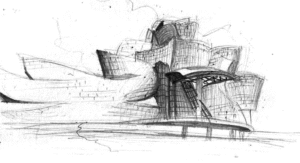
We propose creating a “Bilbao effect” for Porto Santo through the development of Christopher Columbus World (CCW): an iconic, world-class destination dedicated to one of history’s most influential explorers. This landmark project would not only celebrate a global historical figure but also reposition Porto Santo as a must-visit cultural destination.
We project that CCW could attract between 150,000 and 200,000 visitors in its first year alone. In addition, Porto Santo could become a compelling one-day stop for cruise itineraries. Madeira already welcomes over one million cruise passengers annually from approximately 400 ships—an existing flow of visitors that could be partially redirected and expanded.
Christopher Columbus World is more than a monument; it is an opportunity to unlock untapped historical value, drive tourism growth, and place Porto Santo firmly on the global cultural map.
________________________________________
1. Vision
Christopher Columbus World (CCW) is a proposed landmark cultural and visitor destination for the island of Porto Santo. The project aims to create a globally recognisable attraction that celebrates the historical legacy of Christopher Columbus and the Age of Discoveries while strengthening the island’s tourism profile, cultural identity, and economic opportunity.
The ambition is to establish Porto Santo as a destination with a powerful international narrative, capable of attracting visitors, cruise passengers, researchers, students, and cultural travellers.
Christopher Columbus World will be an iconic cultural monument on Porto Santo, Madeira, and Portugal, celebrating Columbus, the Age of Discoveries, the heritage of rum, and Portugal’s role in changing the course of world history.
Designed as an architectural masterpiece, ColumbusWorld will stand alongside the planned Christopher Columbus 1477 Distillery (2028-29) Home – ChristopherColumbusDistillery.com, creating a dual attraction of international significance.
The Age of Discoveries must be studied rigorously, without embarrassment or attempts to rewrite the past according to the ideological conveniences of the present and future.
The Portuguese Empire represents one of the most extraordinary examples of a maritime empire in world history. Its expansion, which began in the fifteenth century, not only marked the beginning of the European Age of Discoveries but also defined a new imperial model based on the control of trade routes, strategic ports, and coastal cities across Africa, Asia, and the Americas.
The rise of the Portuguese monarchy, particularly under Prince Henry the Navigator in the fifteenth century, proved decisive. The Portuguese court invested heavily in cartography, shipbuilding, and navigational studies, transforming Portugal into a pioneering centre for maritime exploration. This geographical position, combined with political ambition and commercial incentives, laid the foundations for an empire built on the control of sea routes rather than territorial conquest.
The discovery of the Cape of Good Hope by Bartolomeu Dias in 1488 and Vasco da Gama’s voyage to India in 1498 opened new spice trade routes. These achievements solidified Portugal’s position as a global maritime power capable of competing with Europe’s major commercial and strategic rivals.
Therefore, the Christopher Columbus World Museum should also cover fields such as nautical studies, shipbuilding, cartography, astronomy, and science, as well as trade routes, diplomacy, evangelisation, contacts between peoples, and the spread of the Portuguese language.
Portugal has changed the course of world history, crossed oceans, connected continents and built a global cultural and linguistic heritage. It is therefore incomprehensible that Portugal still has no major national museum capable of telling this epic story on the scale it deserves.
Portugal and Madeira have an extraordinary heritage, millions of visitors and an unparalleled history. Portugal should not be ashamed of its own history. Portugal needs to embrace, preserve and pass on to new generations what the Portuguese have achieved and the impact they have had on the world.
Christopher Columbus World will have the scientific and museological programme developed with “historical rigour and scientific research, avoiding interpretations shaped by contemporary ideological agendas.
Beyond trade, the Portuguese Empire spread language, religion, and cultural practices. Catholic missionaries accompanied fleets, establishing churches, schools, and religious communities. The Portuguese language took root across vast regions, creating enduring cultural legacies still visible in Brazil, Africa, and Asia.
Throughout centuries of history, countless Portuguese navigators and explorers ventured into new territories and across continents, leaving an enduring legacy for future generations. Their intrepid voyages and bold discoveries opened up new horizons and connected distant civilisations, shaping the course of world history.
Over time, many Portuguese people have transcended borders and challenges, leaving their mark on the world through daring exploration and an adventurous spirit that resonates to this day. Their remarkable deeds echo through the ages, inspiring us to seek out new paths and embrace the unknown with courage and determination.
Although navigators are the most widely recognised and celebrated, Portugal’s history is also enriched by a diverse array of explorers who mapped vast areas of what were, until then, almost unknown continents, exploring wild lands in Africa, South America and beyond.
These brave adventurers played a vital role in expanding geographical knowledge and understanding of the world and the territories we inhabit.
2. Project Idea
Porto Santo and Madeira already hold a significant place in the broader Columbus story and The Age of Discoveries. CCW seeks to build on this heritage by creating a major monument and visitor experience dedicated to the explorer, his era, and the wider age of discovery.
The concept is not simply to build a museum, but to develop a signature attraction with architectural presence, educational value, and strong tourist appeal. The project would be designed to work as both a cultural institution and a destination driver.
3. Strategic Rationale
The project is based on the belief that Porto Santo can benefit from a “Bilbao effect” style transformation, where a landmark attraction helps redefine how the island is perceived internationally.
CCW could:
• Strengthen Porto Santo’s identity as a place of historical significance.
• Increase visitor numbers and length of stay.
• Create a new reason for cruise passengers and day visitors to come ashore.
• Generate wider economic benefit for local businesses, hospitality, and transport.
• Support education, heritage, and cultural tourism.
• Visitor Potential The initial hypothesis is that CCW could attract 150,000 to 200,000 visitors in its first year, particularly if it is positioned effectively for both land-based tourism and cruise traffic.
This potential would need to be tested through:
• Cruise passenger conversion assumptions.
• Accessibility and transport planning.
• Seasonality and tourism demand.
• Marketing reach in key source markets.
• The strength of the visitor experience itself.
5. Core Components
CCW should ideally combine several elements in one integrated destination:
• A landmark monument and building.
• An immersive exhibition or interpretive experience.
• Educational and historical content.
• Retail, food and beverage, and visitor services.
• Space for conferences, exhibitions and events, talks, and school visits.
• A strong visual identity and brand story.
This multi-use approach would make the project more commercially viable and more attractive to a wider audience.
6. Historical Importance
Christopher Columbus remains one of the most widely recognised figures in world history. His voyages are seen as a turning point in global history, marking the beginning of large-scale intercontinental contact and transformation.
Despite this global significance, the Columbus story is not yet strongly expressed in Porto Santo, even though the island has a meaningful historical connection to him. CCW would seek to address that gap by giving the island a stronger and more visible place in the story.
7. Development Opportunity
The project represents an opportunity to create a new cultural anchor for Porto Santo. If carefully planned, CCW could become a destination that combines heritage, tourism, education, and economic development in a single long-term initiative.
For the project to succeed, it will need:
• A compelling masterplan.
• Strong architectural and experiential design.
• Public and private sector alignment.
• A clear business model.
• A credible financing strategy.
• Local and international stakeholder support.
8. Next Steps
The next stage should be to develop a fuller feasibility and investment brief covering:
• Site options.
• Concept design principles.
• Visitor modelling.
• Revenue potential.
• Funding structure.
• Governance and delivery model.
• Planning and regulatory considerations.
This would move CCW from a strong idea into a project that can be properly evaluated by investors, public authorities, and strategic partners.
Christopher Columbus World
A landmark destination for Porto Santo
Subtitle
Transforming Porto Santo into a globally recognised heritage, conference and tourism destination through a flagship cultural attraction inspired by Christopher Columbus.
Core message
Christopher Columbus World is a bold place-making project designed to create a “Bilbao effect” for Porto Santo by combining history, architecture, education, and tourism into one signature visitor destination.
Supporting points
• Porto Santo has a unique historical connection to Christopher Columbus, sugar cane and rum distillation.
• Madeira already attracts significant cruise traffic and broader tourism flows with millions of visitors.
• CCW can convert heritage into a high-value visitor experience.
• The project has the potential to drive new footfall, spending, and international visibility.
• CCW can become a flagship asset for the island’s long-term economic development.
CCW aims to turn Porto Santo’s Columbus legacy into a world-class attraction with strong tourism, cultural, and economic upside.
The opportunity
Why Porto Santo, Why Now
Porto Santo has a rare combination of historical relevance, tourism access, and place-making potential. Christopher Columbus lived on the island after marrying Filipa Moniz, and the island remains closely linked to his story today.
Madeira has also seen record cruise tourism, with well over a million passengers and crew members passing through the Ports of Madeira in 2025. This creates a strong nearby visitor base that a compelling Porto Santo attraction could help convert into on-island footfall.
A globally recognisable story, in a destination that is ready for a signature attraction.
The vision
Christopher Columbus World will be a landmark visitor destination for Porto Santo, combining architecture, heritage, interpretation, and tourism in one flagship development. The project is designed to create a destination with real international visibility, rather than a small local museum.
The ambition is to build a place that makes Columbus’s connection to Porto Santo visible, experiential, and commercially valuable. The result should be an attraction that works for cruise passengers, day visitors, schools, families, and cultural travellers.
A destination that turns heritage into a lasting asset.
The market pull
Built for multiple visitor segments
CCW is designed to serve more than one audience. It should appeal to cruise passengers looking for a memorable shore experience, tourists seeking a reason to visit Porto Santo, and schools or institutions interested in history and education. Further, conference organisers looking for a venue.
Porto Santo already has a live Columbus narrative through its annual Columbus Festival, which recreates the period with markets, performances, and historical programming. CCW would extend that story into a year-round destination with broader commercial potential.
Seasonal event appeal, year-round visitor value.
The investment case
From cultural landmark to economic catalyst
This is not only a heritage project; it is a place-making and economic development opportunity. A successful CCW could strengthen Porto Santo’s brand, increase visitor spend, support local businesses, and create a new reason for visitors to stay longer.
The project has the potential to become a signature island asset, similar in ambition to major cultural landmarks that have transformed how destinations are perceived. The objective is to create a high-quality attraction that delivers both civic value and investable commercial upside.
Mayor Nuno Batista said recently: We Want Quality Tourism
Porto Santo’s future lies in its identity, history and culture, rather than an indiscriminate increase in visitor numbers, according to Mayor Nuno Batista.
Speaking on the sidelines of the Atlantic Tourism Days in Velas, on the Azorean island of São Jorge, Batista said the aim was to offer visitors a distinctive experience that creates a lasting connection with the island.
“We do not want mass tourism. We want quality tourism,” he stressed.
The mayor highlighted Porto Santo’s history, culture, beach, climate and quality of the sea as assets that distinguish it from competing destinations.
He argued that visitors increasingly seek unique experiences and that these can encourage them to return. Those who fall in love with an island, he suggested, develop an emotional attachment that is difficult to break.
His comments follow Miguel Albuquerque’s call for greater investment in tourism on the 28th of September. Speaking at the Tourism Merit Medal ceremony at the Convent of Santa Clara, the President of the Regional Government urged the sector to improve its services and tourism offering to generate higher income.
Albuquerque also argued that improving the destination could be compatible with the interests of residents. Batista placed particular emphasis on avoiding mass tourism and preserving Porto Santo’s identity. Both statements highlighted the importance of quality.
For Batista, the Atlantic Tourism Days also provided an opportunity to exchange ideas with other island destinations facing similar challenges, including transport links and seasonality.
The event concluded on the 4th of October (2026), with the mayor stressing that tourism should serve local communities and help improve residents’ quality of life.”
7 Wonders of Portugal – “Dune Beaches” | Municipality
A cultural flagship with tourism, branding, and revenue potential.
Delivery path
The next step
The concept now needs to move into structured development: feasibility, master planning, visitor modelling, governance, funding, and delivery structure. The key question is not whether the story is strong — it is — but how to shape it into a financeable, buildable, and scalable project.
The next phase should test:
• Site options and access.
• Visitor demand and cruise conversion.
• Capital and operating assumptions.
• Public-private partnership opportunities.
• The most suitable funding structure.
Copyrights © 2018-2026 Christopher Columbus World® | All Rights Reserved